
What we lose when food goes to waste.
- IHS Mega

- Dec 28, 2020
- 1 min read

Food waste refers to food acceptable for human consumption that is being disposed of, whether or not it is stored past its expiration date or left to be spoiled.
Causes
The causes of food waste are varied and occur during production, manufacturing, delivery, selling, and consumption of food. It is often a result of overbuying, overproduction, and underconsumption. It may also be caused by spoilage during the food transportation and preparation process.
Environmental and Economical Effects
In low-income countries, most losses occur during manufacturing, while in developing nations, a lot of food is lost at the stage of consumption.
Food that enters the landfill and rots produces methane—a greenhouse gas that is much more potent than carbon dioxide.
Growing food that ends up in landfills entails consuming up to 21% of our freshwater, 19% of our manure, and18% of our cropland. Food waste ends up losing about a fourth of our water supplies in the form of untouched food or more than $172 billion in wasted water.
How You Can Help
Dining out or eating in, you can reduce waste and save money by making easy changes in how you order, shop, store, and prepare food.
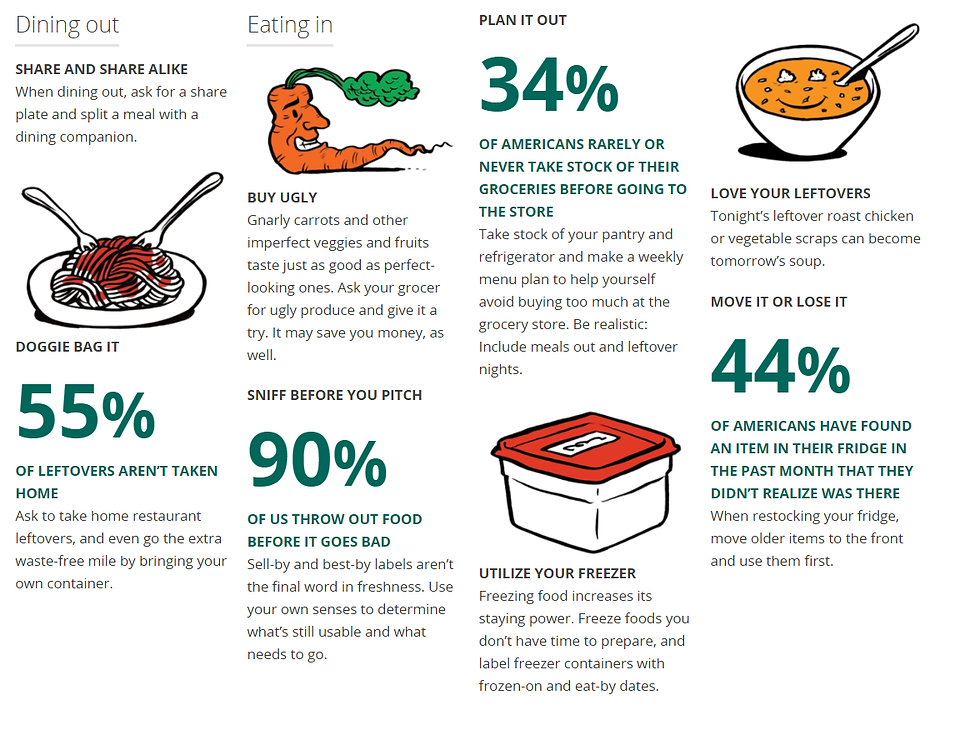
photo credits to worldwildlife.org
Benefits of Eliminating Excess Food

1. Save money from spending less on produce.
2. Reduces methane emissions from landfill sites and reduces the carbon footprint.
3. Conserve energy and money, avoid emissions from increasing, processing, transporting, and selling food.
4. Help the neighborhood by supplying donated untouched food that might otherwise have gone to waste for those who may not have a steady supply of food.


Comments